

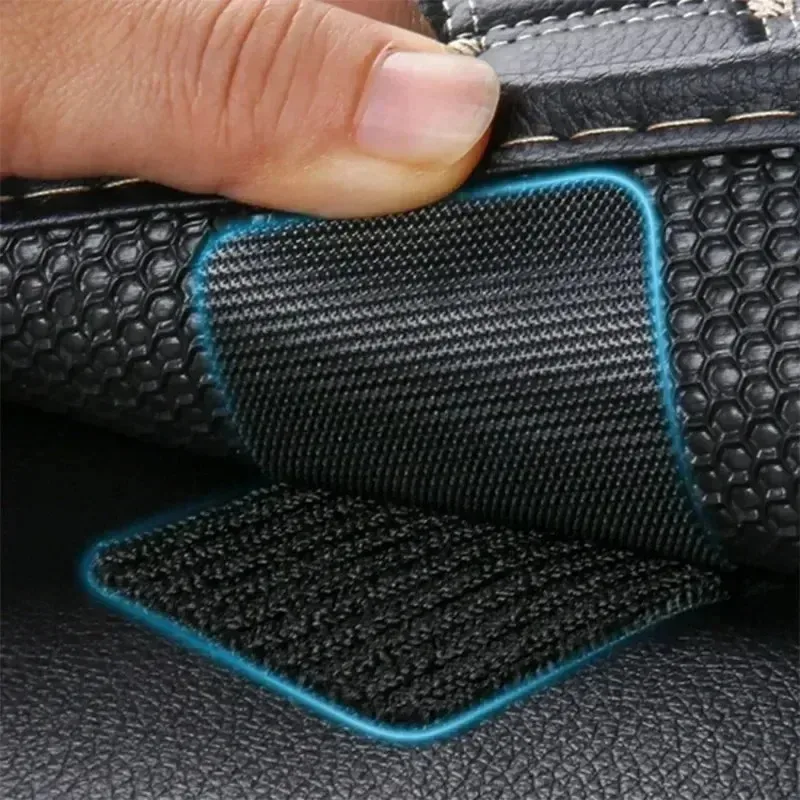
Quick answer: To stop car floor mats from sliding, lock the driver’s mat onto your car’s factory anchor hooks, never stack one mat on top of another, use a mat that is the right size for your footwell, and add hook and loop fixing pads under any mat that has no anchors. Then check the mats every time you clean the car.
A floor mat that creeps forward is more than an annoyance. On the driver’s side it can bunch up around the pedals, and that is a genuine safety problem. This guide explains why mats slide, then walks through five fixes in order of priority, so you know exactly how to stop car floor mats from sliding in your own vehicle.
Why Car Floor Mats Slide in the First Place
Every time you get in and out, your heel pushes the mat a few millimeters forward. Over days and weeks that adds up. Mats slide most when:
- The mat is not attached to the car’s factory anchors, or the car has none.
- A second mat has been laid on top of the original one.
- The mat is a generic size that does not match the shape of the footwell.
- The underside of the mat is smooth rubber sitting on low-pile carpet, so there is very little grip.
Why a Sliding Driver’s Mat Is a Safety Issue
When a driver’s mat slides forward it can catch on the accelerator and hold it down, or sit under the brake pedal and stop it traveling fully. US regulators treat this seriously. The National Highway Traffic Safety Administration classes accelerator pedal entrapment as a category of unintended acceleration, and floor mat entrapment was one of the reasons it proposed requiring brake-throttle override systems in new cars.
Floor mat interference has led to large recalls. Toyota and Lexus recalled nearly 10 million vehicles in the US over floor mats and accelerator pedals that could stick in a pressed position, and as recently as 2025 Lucid recalled all-weather floor mats sold without anchors because they could move and trap the accelerator pedal, advising owners to remove them from the driver’s footwell.
5 Fixes to Stop Car Floor Mats From Sliding
1. Use Your Car’s Factory Anchor Hooks
Most modern cars have retention hooks, posts or twist-lock clips in the driver’s footwell. Your owner’s manual will show where they are. Toyota tells owners to insert the retaining hooks into the floor mat eyelets and turn the upper knob of each hook to lock the mat in place, and Honda’s anchors work the same way, with knobs that turn to lock and unlock. If your mat has eyelets and your car has anchors, this is always the first and most important fix for the driver’s side.
2. Never Stack One Mat on Top of Another
Laying an all-weather mat over the original carpet mat is one of the most common causes of mats sliding into the pedals. Mazda warns that stacking two mats on the driver’s side is dangerous because the retention pins can only keep one mat from sliding forward, and tells owners to always remove the original mat when using an all-weather one. Take the old mat out before you put a new one in.
3. Use a Mat That Fits Your Footwell
A mat that is too long rides up the firewall or the pedal box; one that is too narrow shifts side to side. Toyota recommends only using floor mats designed for your exact model and model year. If you use universal mats, trim them so they lie flat without touching the pedals, and check that the pedals can travel all the way down with the mat in place.
4. Add Hook and Loop Fixing Pads Under Mats Without Anchors
Many mats and footwells have no anchors at all: passenger and rear footwells, trunk liners, older cars and most aftermarket or universal mats. For these, self-adhesive hook and loop pads are a simple, tool-free fix. One half of each pad sticks under the mat and the other half sticks to the car carpet. When you press the mat down, the two halves lock together and the mat stays put, yet you can still pull it up to clean it.
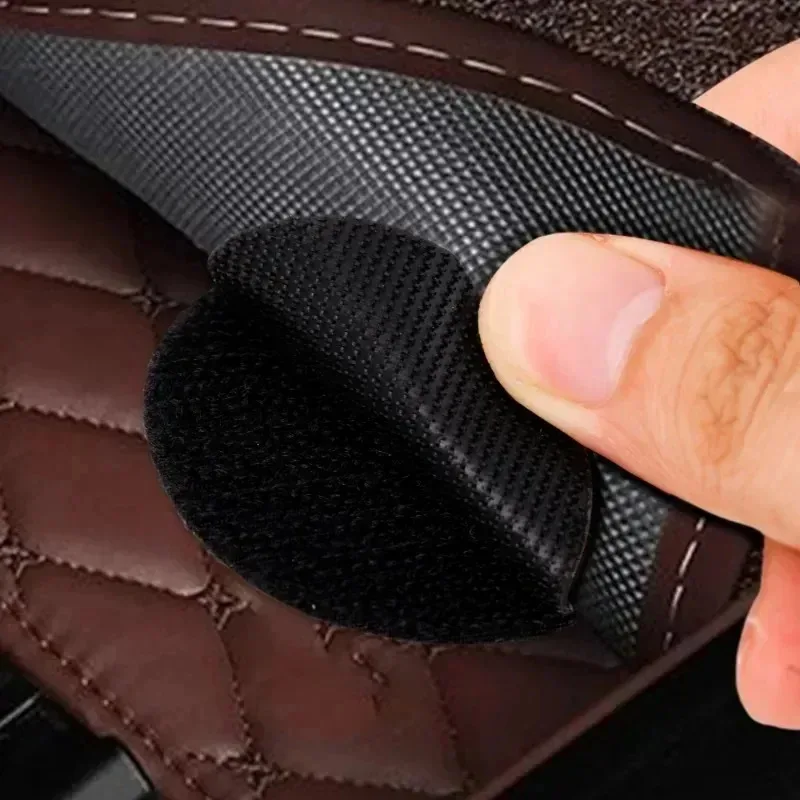
Our Car Carpet Fixing Stickers come in round, square and rectangle shapes and in packs of 10 to 50 pairs, so you can fit four pads per mat across the whole car.
Important: on the driver’s side, use fixing pads in addition to the factory anchors, not instead of them. If your car has anchors, they come first.
5. Check and Clean the Mats Regularly
Even with anchors and pads, you need to look after the mats to stop car floor mats from sliding long term. Dirt and grit under a mat act like ball bearings, and a damp mat loses grip on the carpet. Every time you clean the car, lift the mats, vacuum underneath, let them dry fully, refit them to the anchors or pads, and press each pedal to the floor to confirm nothing is in the way.
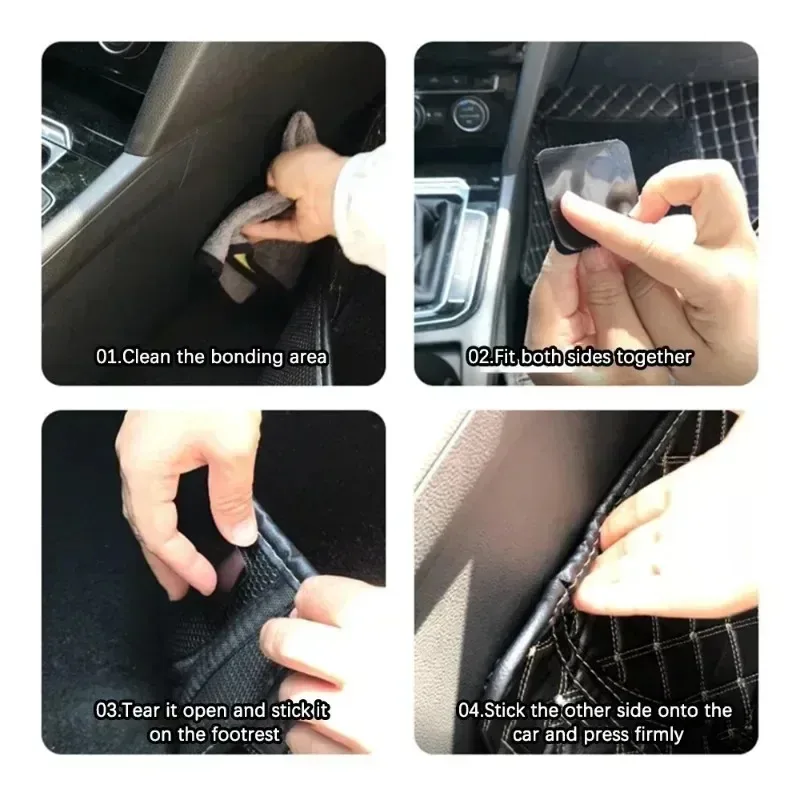
How to Install Hook and Loop Mat Fixing Pads
- Clean the bonding area. Vacuum the car carpet and wipe the underside of the mat so the adhesive has a clean, dry surface.
- Fit each pair together first. Press the hook half and loop half of each pair together before you peel any liners.
- Stick them under the mat. Peel one liner from each pair and press the pads onto the underside of the mat, one near each corner.
- Lay the mat and press down. Peel the second liners, lay the mat in its correct position, and press firmly over each pad so the other half bonds to the car carpet.
Frequently Asked Questions
Why does my driver’s side floor mat keep sliding forward?
Usually because it is not locked onto the factory anchor hooks, it is stacked on top of another mat, or it is the wrong size for the footwell. Your heel pushes it forward a little every time you get in and out.
Is it dangerous if my floor mat slides under the pedals?
Yes. A mat that bunches up around the pedals can hold the accelerator down or stop the brake pedal traveling fully, which is why carmakers fit anchors and why regulators have recalled mats that can trap the accelerator.
Can I put an all-weather mat on top of my carpet mat?
No. Carmakers including Mazda and Toyota say not to stack mats on the driver’s side. Remove the original mat first, then fit the all-weather mat to the anchors.
What can I use if my car has no floor mat hooks?
Self-adhesive hook and loop fixing pads work well. Stick one half under the mat and the other half to the car carpet so the two lock together when the mat is pressed down.
Will adhesive mat pads leave marks on my car carpet?
Any self-adhesive pad can leave some residue if it is pulled off later, so treat them as a semi-permanent fix. Choose the position carefully before pressing down, and if you need to remove one, peel it slowly.
Key Takeaways
- Driver’s side first: always lock the mat onto the factory anchors if your car has them.
- One mat per footwell, never stacked.
- Use mats that fit your footwell and never reach the pedals.
- Add hook and loop fixing pads to any mat without anchors.
- Check the mats and pedal travel every time you clean the car.
- Follow these steps and you can stop car floor mats from sliding for good.
Ready to fix the mats in the rest of your car? Shop our Car Carpet Fixing Stickers or browse more car accessories.