

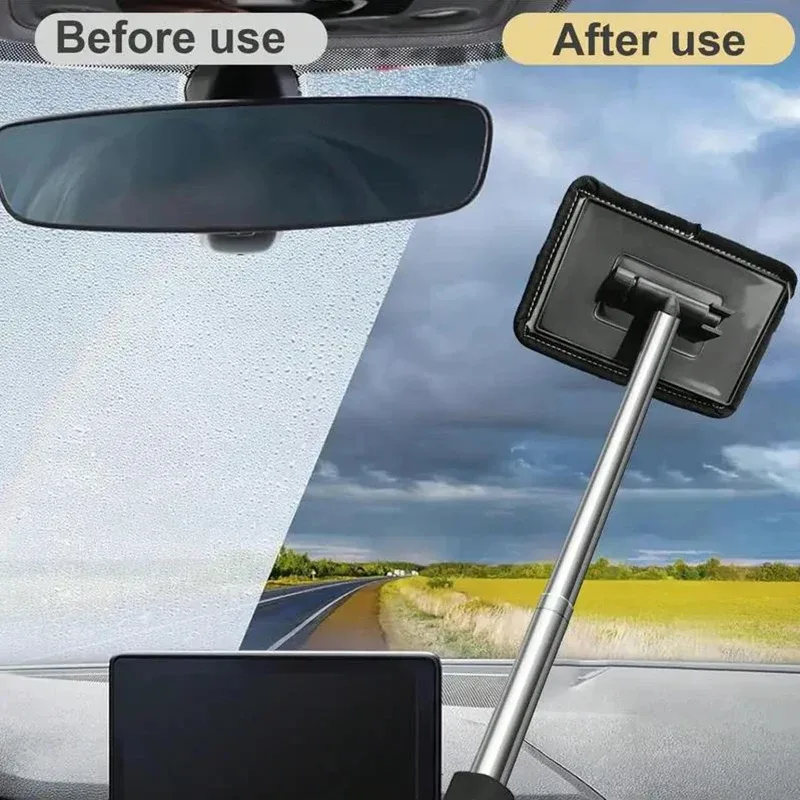
Quick answer: To clean the inside of the windshield properly, start with a dry microfiber pass to lift dust, then wipe with an ammonia-free glass cleaner sprayed onto the pad rather than the glass, work in straight overlapping strokes, and finish with a second, completely dry cloth. A long-handled cleaning tool makes the low corners behind the dashboard reachable from your seat.
You clean it, it looks fine in the garage, and then the first time you drive into a low sun or meet oncoming headlights at night, the whole windshield lights up with a gray, smeary haze. Most people blame their glass cleaner. Usually the cleaner is fine. The problem is what is on the glass, how it got there, and how it is being wiped off.
This guide covers all three, and shows you how to clean the inside of the windshield so it actually stays clear. It is written for normal drivers, not detailers with a garage full of products, and everything here can be done in about ten minutes with a couple of towels and the right tool.
Why the Inside of Your Windshield Gets Hazy
The outside of the windshield gets rain, road spray and bugs, and your wipers deal with most of it. The inside never sees a wiper blade, yet it often ends up dirtier. There are three main reasons.
1. Your dashboard is slowly releasing chemicals
Dashboards, door panels and trim are made from plastics and vinyl that contain plasticizers, which keep them soft and flexible. Over time, and much faster when the car sits in the sun, some of those compounds evaporate. This is called off-gassing, and it is the same process behind that famous “new car smell”. The vapor has to go somewhere, and it condenses on the coolest surface nearby, which is usually the glass. RepairPal points out that this oily film is hard to see during the day but can badly distort your vision at night.
That is why a brand-new car can develop a film within weeks, and why the haze is always worst at the bottom of the windshield, right above the dash.
2. Dashboard dressings and sprays
If you use a shiny protectant on the dashboard, some of it ends up on the glass too, either as overspray or as vapor on hot days. A greasy dressing on the dash is one of the quickest ways to get a greasy windshield.
3. Breathing, smoking, vaping and hands
Every breath you take inside a closed car carries moisture and tiny amounts of oil. Smoking and vaping leave a much heavier residue. Add the fingerprints from wiping fog off with your hand, and the inside of the glass slowly builds a layer that ordinary wiping just spreads around.
Why the Haze Matters: It Is a Night-Driving Problem
A thin film is almost invisible in flat daylight. The trouble starts when bright light hits the glass at an angle. Oncoming headlights, streetlights and a low winter sun all scatter off the film, so instead of a clean point of light you see a glowing smear across a large part of your view. That glare is tiring on a long night drive and it can hide a pedestrian or a cyclist at exactly the moment you need to see them.
A hazy windshield also fogs faster. Water droplets condense more easily on a dirty surface than on clean glass, so a film makes the morning fog-up worse and slower to clear.
What You Need
You do not need a shelf of products. This is the whole kit:
- Two or three clean microfiber towels. One for the cleaning pass, one dry for buffing. Do not use the towel you use on wheels or door jambs.
- An ammonia-free glass cleaner. Ammonia can damage window tint and dry out rubber and plastic trim, so a tint-safe automotive glass cleaner is the safer choice. Some people get good results with a mix of distilled water and a little isopropyl alcohol.
- A long-handled windshield cleaning tool. This is the piece most people are missing. The bottom of a modern windshield is a long way from the driver’s seat and it is almost impossible to wipe evenly by hand.

How to Clean the Inside of the Windshield in 7 Steps
Step 1: Park in the shade and let the glass cool
Cleaner evaporates almost instantly on hot glass, which is the main cause of streaks. Work in the shade, or in the morning before the sun has heated the car. The glass should feel cool to the touch.
Step 2: Protect the dashboard
Lay an old towel along the top of the dash. It catches drips and stops overspray getting onto a screen, a speaker grille or a soft-touch surface.
Step 3: Do a dry pass first
Before any liquid goes near the glass, wipe the whole windshield with a dry microfiber pad. This lifts loose dust and lint so you are not turning it into muddy streaks in the next step. If you have a telescopic cleaner, extend it fully for this pass so you can reach the base of the glass on the passenger side.
Step 4: Spray the pad, not the glass
Spraying directly onto the inside of the windshield sends mist straight onto the dashboard and leaves heavy wet patches that are hard to wipe evenly. Instead, lightly mist the cleaning pad or towel. It should be damp, never dripping.
Step 5: Wipe in straight, overlapping strokes
Start at the top and work down in straight lines, side to side, with each stroke overlapping the last by about a third. Circles tend to leave swirl marks you only notice at night. Do the driver’s half, then the passenger’s half, then the narrow strip right along the bottom edge, which is where the off-gassing film is thickest.
Step 6: Buff with a dry pad
Switch to a completely dry, clean microfiber and go over the whole windshield again, this time in vertical strokes. Changing direction between the wet and dry passes makes it easy to tell which pass left a streak, if any. Horizontal streak? Redo the wet pass. Vertical streak? Redo the buff.
Step 7: Check it the way you will see it
Sit in the driver’s seat and look through the glass toward a light source, or shine a phone flashlight across the glass at a low angle. Any haze that is left will show up immediately. Spot-fix it with a dry corner of the towel.
Why a Long-Handled Tool Works Better Than a Hand Towel
The hardest part of any attempt to clean the inside of the windshield is the reach. Try cleaning the whole windshield by hand from the driver’s seat and you will notice three problems. You cannot reach the far bottom corner without twisting across the center console. You press hard where your hand is comfortable and lightly where it is not, so the film comes off unevenly. And your fingertips touch the glass, leaving fresh oil behind the towel.
A handheld windshield cleaning tool fixes all three. The pad is flat and the pressure is even, the handle gives you reach, and your hand never touches the glass. We sell two versions, depending on how much reach you need.
Telescopic Windshield Cleaner
The Telescopic Windshield Cleaner has a handle that slides out from 32cm to 50cm and a 15cm microfiber pad on a head that pivots through 180 degrees. The pivot is the useful part. It keeps the pad flat on the glass as you change the angle of the handle, so it follows the steep rake of the windshield instead of cleaning with one edge. It suits larger cars, SUVs and anyone who wants to reach the passenger-side corner without leaving the driver’s seat.
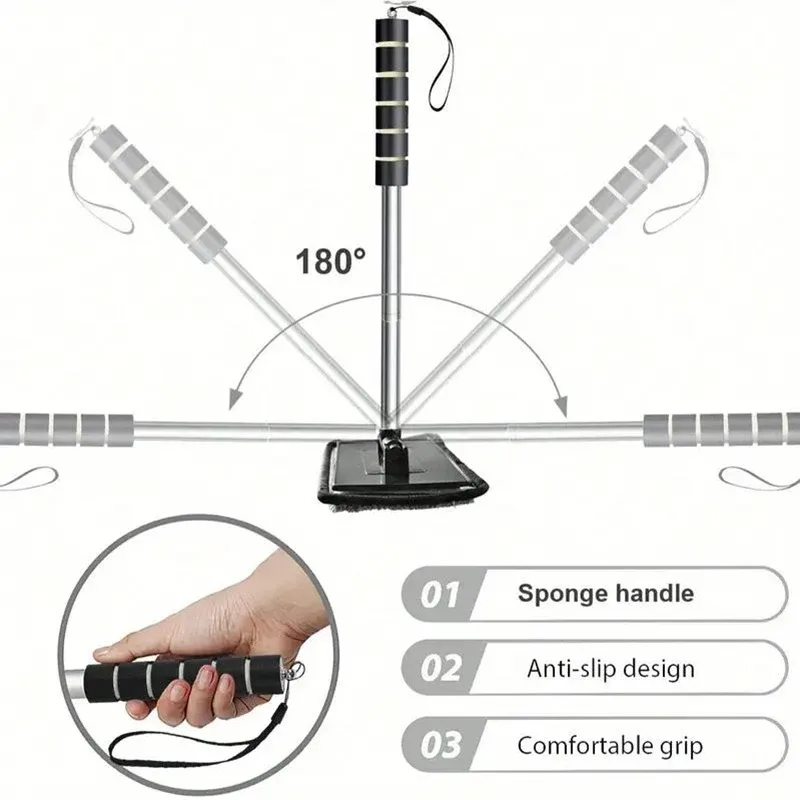
Car Windshield Cleaning Tool
The Car Windshield Cleaning Tool is the simpler, lower-cost option: a fixed 40cm handle with a 12.5 x 8.8cm head and a removable, washable cloth cover. It is available on its own or in 4-piece and 7-piece sets with spare covers, which is handy if you want a fresh pad ready while one is in the wash, or one tool for each car in the household.
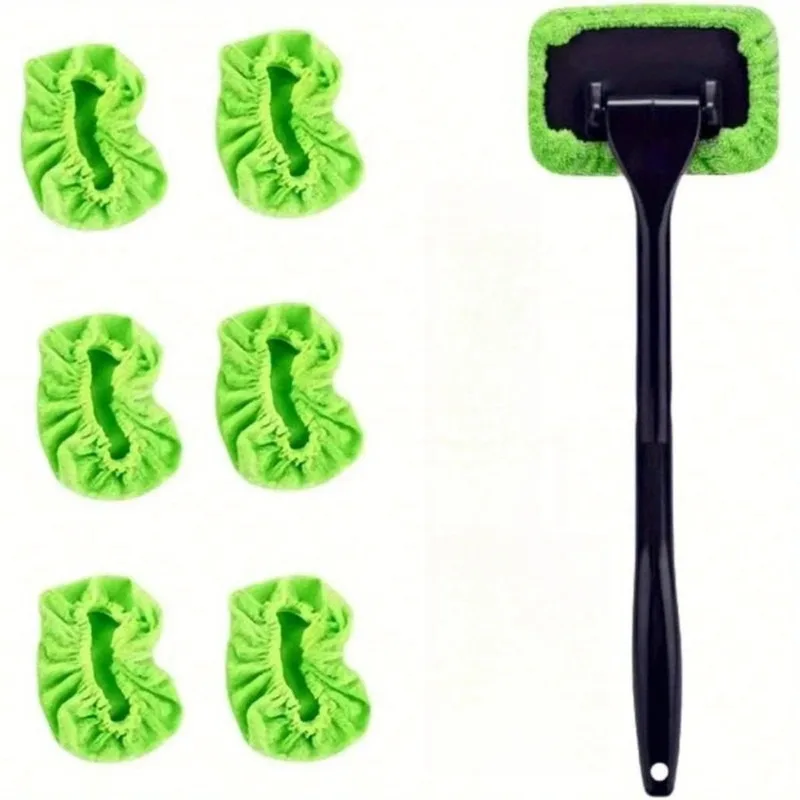
Whichever you use, keep separate pads for the cleaning pass and the buffing pass, and wash them on their own without fabric softener. Softener leaves a coating on the fibers that will put streaks straight back onto the glass.
Common Mistakes That Cause Streaks
- Using paper towels. They shed lint and they are too absorbent in some spots and too dry in others.
- Too much cleaner. More liquid does not mean cleaner glass. It means more residue to buff off.
- Cleaning in direct sun. The cleaner dries before you can wipe it away.
- A dirty or softened towel. If the cloth has wax, dressing or softener on it, you are applying a film rather than removing one.
- Skipping the bottom edge. This is where the haze is heaviest and where most people give up because it is hard to reach.
How to Keep the Haze From Coming Back
You cannot stop off-gassing completely, especially in a newer car, but you can slow it down a lot.
- Use a sunshade. Heat speeds up off-gassing. A reflective sunshade keeps the dashboard cooler, which means less vapor reaching the glass.
- Crack the windows in hot weather when it is safe to do so, so vapor can escape instead of condensing.
- Go easy on dashboard shine products. A matte, water-based interior cleaner leaves far less on the glass than an oily dressing.
- Keep a cleaning tool in the car. A quick dry pass once a week, before the film builds up, is much easier than a deep clean once a month.
Bonus: How to Clear Fog Off the Inside of the Windshield Quickly
Fog and haze are different problems, but they often turn up together. When the glass fogs, resist wiping it with your hand or sleeve. That leaves smears that will glow at night. Use the climate controls instead. AAA recommends turning off air recirculation so the system pulls in drier outside air rather than recycling the humid air already in the cabin.
Turn the air conditioning on as well, even in winter. The A/C dries the air as it cools it, so warm, dry air on the defrost setting clears fog much faster than heat alone. A clean windshield also fogs less in the first place, which is one more reason to keep the film under control.
Frequently Asked Questions
Why does the inside of my windshield get dirty so fast?
Mostly off-gassing. Plastics and vinyl in the dashboard release plasticizers that condense on the cool glass as an oily film. It happens faster in new cars and in hot weather, and dashboard shine products and smoking make it worse.
What is the best way to clean the inside of the windshield?
Clean microfiber and an ammonia-free glass cleaner, applied to the pad rather than sprayed on the glass. Use one damp pad to clean and a second dry pad to buff.
Why is my windshield still streaky after I clean it?
Usually too much cleaner, hot glass, or a dirty or fabric-softened towel. Clean in the shade, mist the pad lightly, and finish with a completely dry microfiber.
Should I use ammonia glass cleaner inside my car?
It is best avoided. Ammonia can damage aftermarket window tint and is harsh on interior plastics and rubber. Choose a tint-safe, ammonia-free automotive glass cleaner.
How often should I clean the inside of my windshield?
A quick dry wipe once a week keeps the film from building up. A full clean with glass cleaner every two to four weeks is enough for most cars, more often for new cars or if anyone smokes or vapes inside.
Is a windshield cleaning tool better than using my hand?
For the inside of the windshield, yes. It reaches the low corners behind the dashboard, applies even pressure across the whole pad and keeps your fingers off the glass, so you do not leave new smudges behind.
Key Takeaways
- The haze on the inside of the windshield is mostly off-gassing from the dashboard, not outside dirt.
- It is hard to see in daylight but causes serious glare at night.
- To clean the inside of the windshield, work in the shade: dry pass, damp pass with cleaner on the pad, then a dry buff.
- A long-handled tool reaches the bottom of the glass and keeps your fingers off it.
- A sunshade and fewer dashboard shine products slow the film down.
If the inside of your windshield never seems to stay clean, start with the right tool. Have a look at the Telescopic Windshield Cleaner or the Car Windshield Cleaning Tool, or browse more car care accessories.