

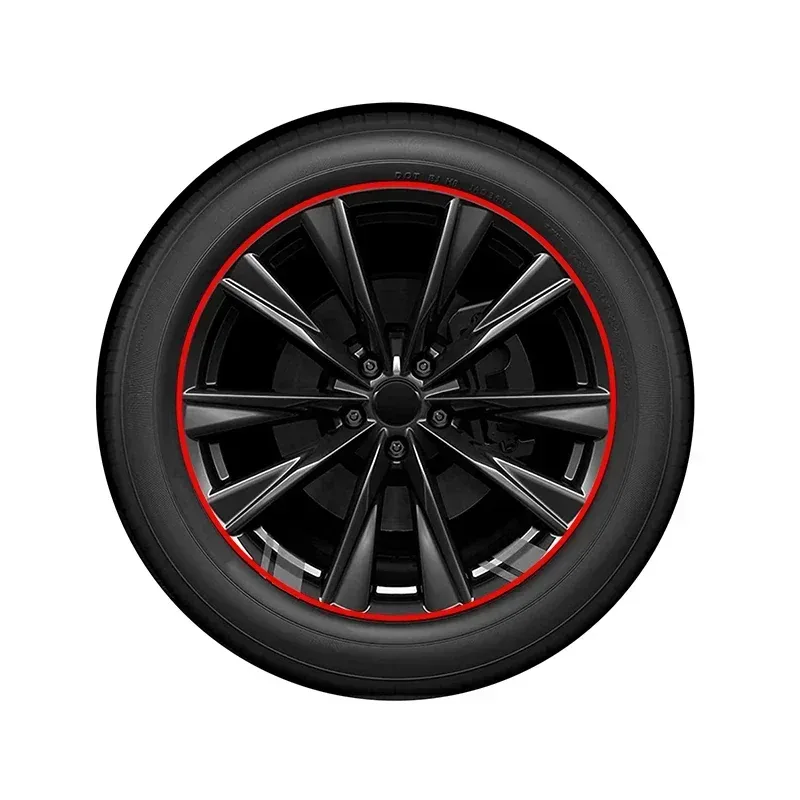
Quick answer: To prevent curb rash, tilt your passenger-side mirror down so you can see the curb while parking, slow right down in the last few feet, stop 6 to 18 inches (15 to 45cm) from the curb rather than touching it, and turn your wheels away from the curb before pulling out. A flexible rim protection strip adds a sacrificial layer that takes the light scrapes instead of the wheel.
Curb rash is the silver scrape along the outer lip of an alloy wheel that appears the first time you misjudge a parallel park. It usually happens at walking pace, it takes about half a second, and it can sit there on your wheel for years every time you walk up to the car.
The good news is that almost all curb rash is avoidable with a few habits and a little protection. This guide explains what curb rash actually is, when it is just cosmetic and when it is not, what repairs typically cost, and the practical ways to prevent curb rash in the first place.
What Is Curb Rash?
Curb rash is damage to the outer edge of a wheel caused by contact with a curb, a parking block or a raised concrete edge. On an alloy wheel it usually shows up as scratches, gouges or a rough, scuffed band along the rim lip, the part of the wheel that sticks out furthest from the tire.
Modern cars make it more likely than it used to be. Wheels have grown bigger and tires have grown thinner, so there is less rubber sidewall standing between the metal rim and the curb. On a car with 19 or 20-inch wheels and low-profile tires, the rim lip often sits almost flush with the tire, which means the wheel touches the curb before the tire does.
Is Curb Rash Just Cosmetic?
Often it is, but not always. A light scuff on the painted or machined surface is a looks problem. The trouble is that once the finish is broken, bare aluminum is exposed to water and road salt, and corrosion can creep under the surrounding paint over time. That is how a small scrape becomes a bigger, flaking patch a year later.
The more important point is that hitting a curb hard enough to gouge the wheel can also damage the tire and suspension. After any real impact, check the following:
- The tire sidewall. Look for bulges, bubbles, cuts or exposed cords. Discount Tire describes a sidewall bubble as a raised bulge usually caused by hitting a curb or pothole, and says tires with bubbles should be replaced immediately. A bulge means the internal structure is damaged and the tire can fail without warning.
- The wheel shape. Look for cracks or a flat spot on the rim, and listen for a new vibration at speed.
- The steering. If the steering wheel is suddenly off-center, or the car pulls to one side, something in the steering or suspension may be bent and the alignment needs checking.
- Tire pressure. A slow pressure loss after a curb strike can mean the tire bead or the rim is no longer sealing properly.
If you see any of those, get the car checked by a tire shop before driving it any distance. Curb rash on the wheel is annoying. A damaged tire is dangerous.
How Much Does Curb Rash Repair Cost?
Prices vary a lot by region, wheel size and finish, but professional cosmetic repair is usually charged per wheel. Wheel repair specialists commonly quote somewhere around $75 to $200 per wheel for sanding, filling, repainting and clear-coating ordinary curb rash. Diamond-cut and chrome finishes cost more, and a cracked or badly bent wheel may need replacing altogether, which can run into hundreds of dollars per wheel.
Do the math across four wheels and a couple of parking mistakes a year, and prevention starts to look very cheap.

9 Ways to Prevent Curb Rash
1. Tilt the passenger mirror down when parking
This is the single most useful habit. Angle the passenger-side mirror down until you can see the rear wheel and the curb at the same time. You stop guessing where the curb is and start watching it. Many cars can do this automatically when you select reverse; check your settings menu for a “reverse tilt” or “mirror dip” option.
2. Slow down in the last few feet
Curb rash almost never happens at speed. It happens in the final creep into a parking space, when the car is moving just fast enough that you cannot react before the wheel touches. Cover the brake and let the car crawl in the last few feet.
3. Aim to stop short of the curb, not against it
You do not need to be touching the curb to be parked legally and neatly. A gap of roughly 6 to 18 inches is close enough to be out of traffic and far enough to keep the wheel off the concrete. If you feel the tire touch, stop, move forward, and adjust rather than scrubbing along it.
4. Watch the front wheel when you pull out
A lot of curb rash happens on the way out, not the way in. When you turn the wheel hard to leave a tight parallel spot, the front wheel swings toward the curb. Move forward a little before turning, or reverse slightly first so you have room to steer away.
5. Use your cameras properly
If your car has a 360-degree or curb-view camera, use the view that shows the side of the car, not just the rear. Rear cameras show you what is behind, not how close your front wheel is to the curb.
6. Be extra careful in drive-throughs and parking garages
Tight drive-through lanes with raised concrete edges and parking garage ramps are curb rash hot spots. Take them slowly and keep a little extra space on the inside of the turn.
7. Pick tires with a rim protector lip
Some tires are made with a raised rubber rib on the sidewall, often called a rim protector, which sticks out slightly beyond the wheel edge. It will not stop a hard hit, but it gives a bit of a buffer against light scrapes. Check the tire description when you next replace yours.
8. Fit a rim protection strip
For the best everyday protection, add a sacrificial layer. A rim protection strip is a flexible band that wraps around the outer lip of the wheel. When you misjudge the curb, the strip takes the scrape instead of the aluminum. If it gets badly scuffed, you can peel that section off and replace it, which costs a fraction of a wheel refinish.
9. Check your wheels after every wash
Small scuffs are much easier to deal with early. Look at each rim lip after washing the car. A tiny scrape can be touched up before water and salt get under the finish.
How Rim Protection Strips Work
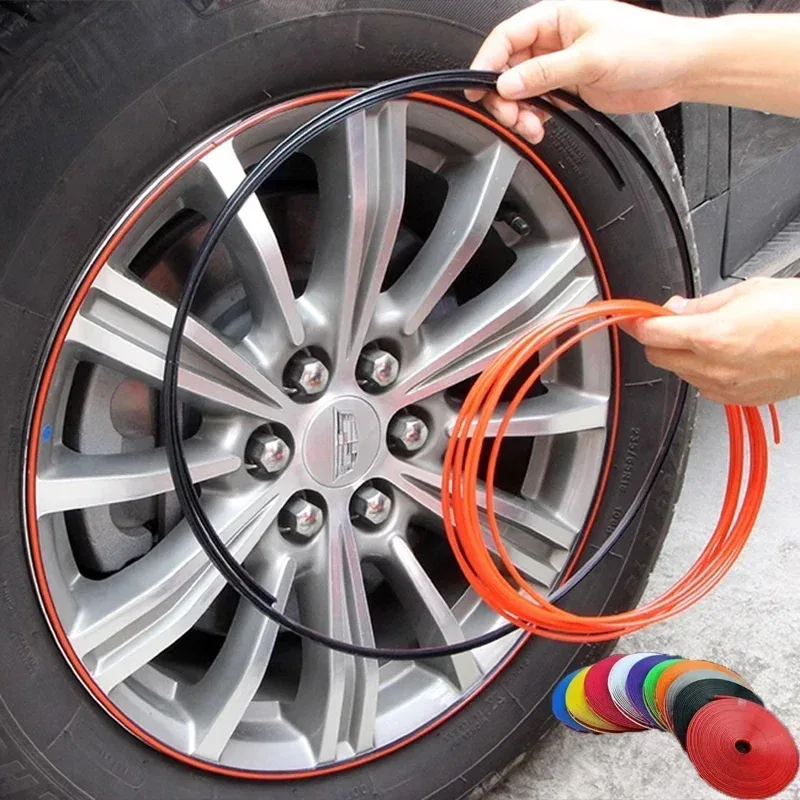
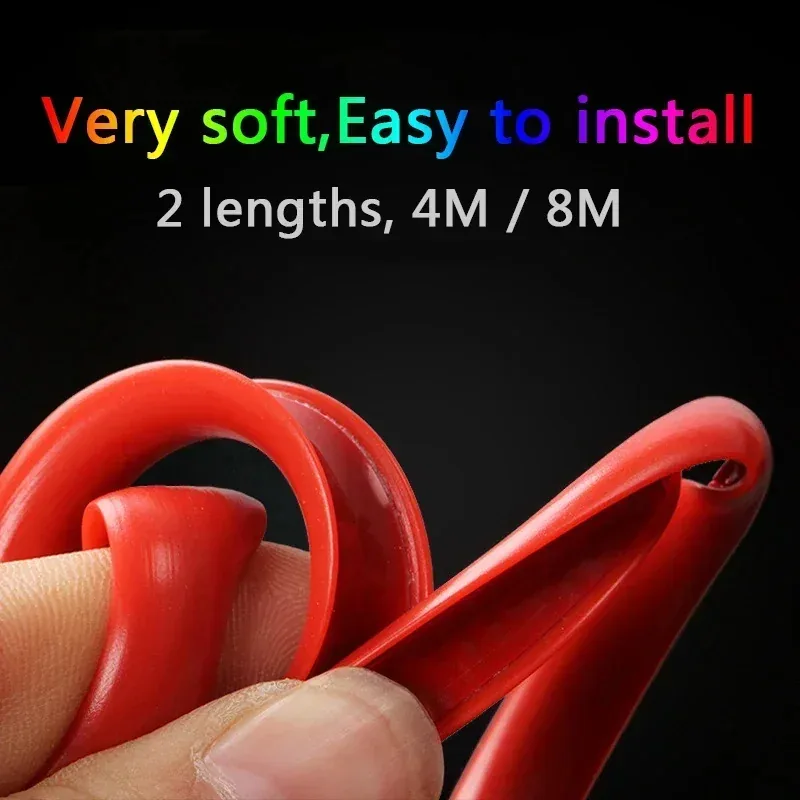
Our Car Wheel Rim Protection Strip is a soft, flexible strip with a self-adhesive backing. You press it into the outer edge of the rim, all the way around, and trim off the excess. It sits on the part of the wheel that touches the curb first, so it takes the light contact that would otherwise scratch the metal.
A few things worth knowing before you buy:
- It is a buffer, not armor. A strip protects against the everyday scrape, the slow brush against a curb while parking. It will not stop a hard, fast hit from bending a wheel or damaging a tire, and nothing that thin could.
- One roll does a set. Each roll is 8 meters (about 26 feet) long, which is enough to go around all four wheels on most cars, SUVs and trucks.
- It can look good too. The strip comes in 9 colors, so you can match the wheel for a subtle look or pick a contrast color as an accent ring. Black is popular on dark wheels; red and blue are common on sporty cars.
- Weather resistance. The manufacturer rates the strip as waterproof and resistant to heat and sun.
How to Fit a Rim Protection Strip
- Wash and dry the wheels thoroughly. Any brake dust or tire shine on the rim lip will stop the adhesive bonding.
- Wipe the rim edge with isopropyl alcohol to remove the last traces of grease, and let it dry.
- Fit on a warm day, or warm the strip gently. Adhesive bonds best when it is not cold, and a warm strip curves around the rim more easily.
- Start at the bottom of the wheel and peel the backing as you go, pressing the strip firmly into the gap between tire and rim lip.
- Work all the way around, pressing every inch or so, then cut the end so it meets the start cleanly.
- Leave it to cure. Avoid washing the car or driving hard for a day so the adhesive can fully set.

What to Do If You Already Have Curb Rash
If the damage is already there, you have three choices.
Leave it and protect it. If it is a light scuff and the tire and wheel are otherwise fine, clean it, seal it with a touch-up or clear coat so moisture cannot get in, and fit a rim strip to cover the edge and stop it getting worse.
DIY repair. Kits with filler, sandpaper and paint can tidy up shallow scratches on a painted wheel. Results depend heavily on patience and color match, and they rarely work on machined or diamond-cut finishes.
Professional repair. For deeper gouges, special finishes or a car you plan to sell, a wheel repair specialist will usually give the best result. Fit protection afterwards so you are not paying twice.
Frequently Asked Questions
How do I prevent curb rash when parallel parking?
Tilt the passenger mirror down so you can see the rear wheel and the curb, reverse slowly, and stop about 6 to 18 inches from the curb instead of touching it. Straighten the wheels before you stop so you are not scrubbing the rim along the concrete.
Is curb rash bad for my wheels?
Light curb rash is mainly cosmetic, but broken paint lets moisture and road salt reach the bare metal, which can lead to corrosion. A hard curb strike can also damage the tire sidewall or the suspension, so check for bulges, vibration or an off-center steering wheel.
Do rim protectors actually work?
Yes, for the everyday light scrapes that cause most curb rash. A rim protection strip sits on the outer lip and takes the contact instead of the wheel. It will not prevent damage from a hard, fast impact.
Will a rim protection strip fit my wheels?
Because it is a flexible strip rather than a molded part, it fits most alloy wheel sizes. One 8 meter roll covers all four wheels on most cars, SUVs and trucks.
Can I take a rim protection strip off later?
Yes. It can be peeled off and replaced, which is the point: a scuffed section of strip is far cheaper to replace than refinishing a wheel. Peel slowly and clean off any adhesive residue with a suitable remover.
Should I drive on a tire after hitting a curb?
Only if the sidewall has no bulges, cuts or exposed cords, the tire holds pressure and the car drives straight with no new vibration. If in doubt, have a tire shop inspect it.
Key Takeaways
- Most curb rash happens at walking pace while parking, so it is very preventable.
- Tilt the passenger mirror down, slow down in the last few feet and stop short of the curb.
- Watch the front wheel when pulling out of a tight space.
- After a hard hit, check the tire sidewall for bulges before worrying about the wheel.
- A rim protection strip is a cheap, replaceable way to prevent curb rash from everyday scrapes.
Ready to protect your wheels before the next tight parking spot? Take a look at the Car Wheel Rim Protection Strip in 9 colors, or browse more wheel and exterior accessories.